February Focus: Prevention
Every child deserves a healthy smile — and the good news is, the most common childhood disease is also one of the most preventable. Tooth decay affects more children than asthma and obesity combined, yet early habits and preventive care can change that story. This February, ADHA is helping dental hygienists lead the conversation on children’s oral health.

RECORDED WEBINAR: Trauma-Informed Care in Dental Care: Dental Hygienists’ Role
Recorded Aug. 21, 2025
1.0 CE • Free for ADHA Members
Presented by: Lisa J. Heaton, PhD, Hannah Cheung, MPH, MS, RDH
Learn how traumatic experiences affect oral health and dental anxiety, and discover practical strategies for providing compassionate, trauma-informed care that addresses the unique needs and concerns of both pediatric and adult patients.

RECORDED WEBINAR: Abuse, Neglect and Trafficking: Our Responsibility
Recorded February 21, 2024
1.5 CE • Free for ADHA Members
Presented by: Denise M. Messina, MDH, BS, RDH & Bridget M. Wright, MACPR, BSDH, EFDA
Learn to recognize physical, behavioral, and emotional signs of child and elder abuse or neglect. By understanding how to identify and support survivors, you can make a vital difference in their lives.
ACCESS THE RECORDING
Bring Oral Health Education Where Kids Are
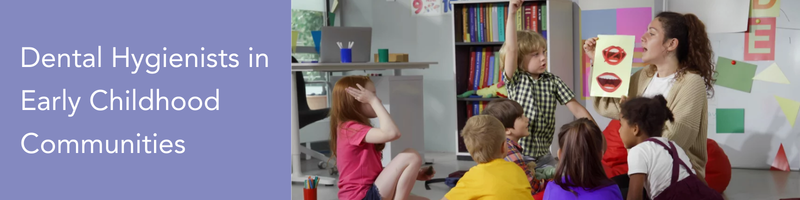
Dental hygienists can make a lasting impact beyond the operatory by partnering with early childhood programs in their communities. ADHA’s “Happy Smiles for Little Teeth” toolkit gives you everything you need to get started — from outreach letter templates to activity ideas — so you can help prevent early childhood tooth decay and foster healthy habits from the start.
Share these videos from the Iowa Dept. of Health and Human Services
Join Lucy and her friends and learn to brush – every day!

Join Lucy and her friends and learn to floss – every day!
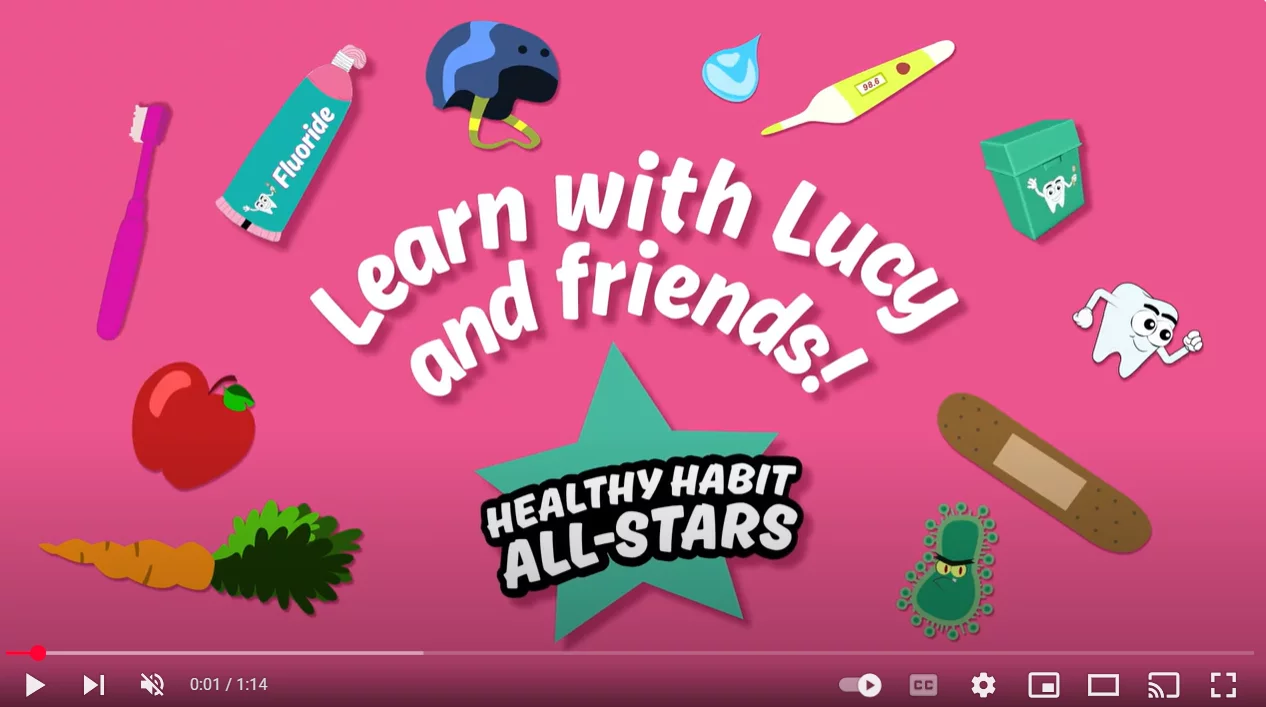
Join Lucy and her friends to learn how to prevent cavities!
4-Minute Reads
 Leading the Way in Pediatric Oral Health Promotion
Journal of Dental Hygiene editorial by Denise C. McKinney | Feb. 2026
Dental hygienists lead pediatric oral health promotion through Head Start, sealant programs, and non-traditional care settings, addressing social determinants to reduce childhood caries.
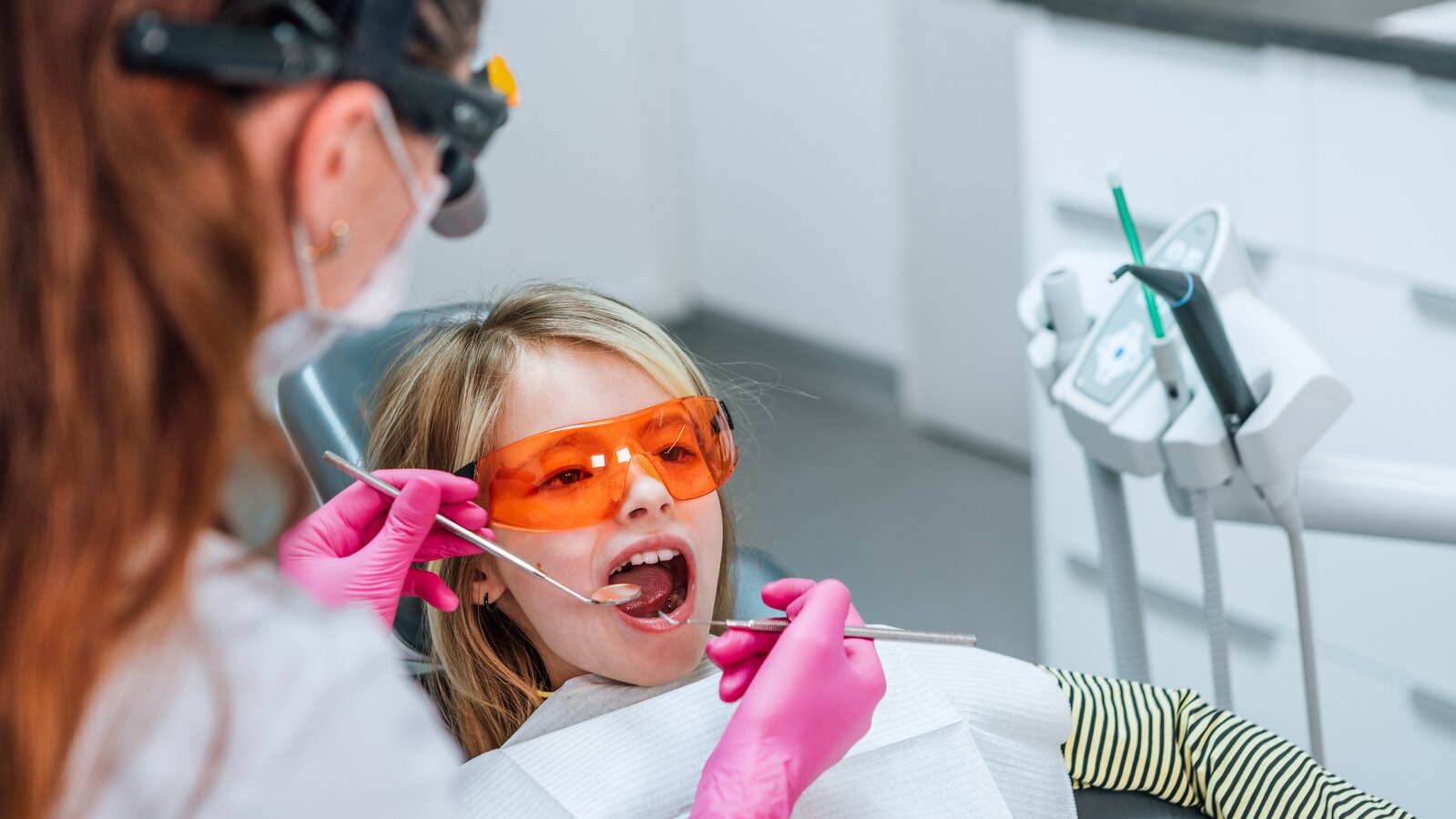 Oral and Dental Aspects of Child Abuse and Neglect
Hygienist Hub | By JoAnn Gurenlian | May 29, 2024
Child abuse affects one in seven U.S. children, with various oral manifestations – healthcare providers must recognize signs of physical abuse, neglect, trafficking, and bullying, requiring mandatory reporting and intervention.
Atraumatic and Minimally Invasive Restorations: Managing Early Childhood Caries
Hygienist Hub | By Michael Long | May 20, 2025
Managing early childhood caries doesn’t always require traditional restorative methods. Learn how minimally invasive techniques like ART, SDF, and SMART can help you provide effective, patient-friendly care in both clinical and community settings.
 Caregivers’ Comprehension of the Terms Decay and Cavities
Journal of Dental Hygiene | , , and | Dec. 2021
Caregivers of young children often lack understanding of dental terms, highlighting the need for better oral health education from dental professionals to ensure proper preventive care at home.
Helpful Downloads to Share 📋
- Establishing a Bedtime Routine (with Brushing!) for Your Child
- Encouraging Children to Drink Water
- What are Dental Sealants and Why Should Kids Get Them?
- Helping Children Quit the Pacifier
- Dental Care for Children with Special Needs (CMS): English | Spanish
Volunteer Opportunity!
Join the ADHA Foundation and Colgate’s BSBF program in a month-long volunteer drive to improve the oral health of under-served children. Find local opportunities to sign up, volunteer your experience, and support dental hygienists driving change, everywhere!
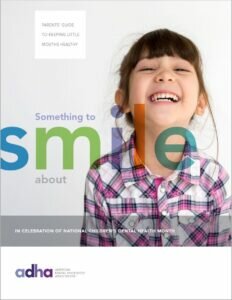
Get the Parents’ Guide
To support your oral health education, we created a quick-reference guide for download. Post it on your practice website, email it as an appointment follow up, or print and use it to support your conversations.
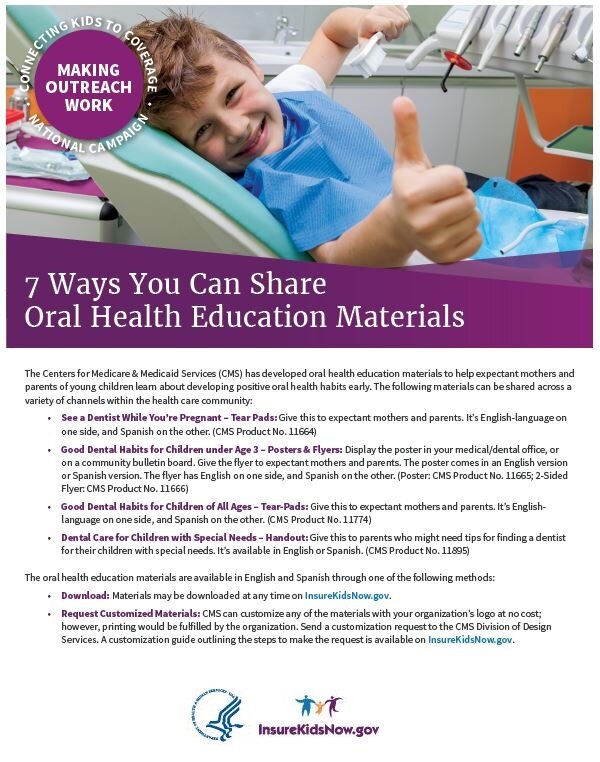
Make Your Outreach Work
The Centers for Medicare & Medicaid Services (CMS) has developed oral health education materials to help expectant mothers and parents of young children learn about developing positive oral health habits early. You too, can amplify the importance of oral health by displaying, sharing and distributing informational materials!
Tooth decay is the most common preventable chronic disease among U.S. children
If left untreated, it can negatively affect a child’s physical and social development, as well as their school performance.
In 2010, the CMS launched an Oral Health Initiative to help states ensure that children enrolled in Medicaid and CHIP have easy access to dental and oral health services.
LEARN ABOUT DENTAL BENEFITS FOR CHILDREN IN MEDICAID AND CHIP
FIND YOUR STATE’S COMPLETE LIST OF BENEFITS FOR CHILDREN IN MEDICAID AND CHIP
In their State of Little Teeth Report, 2nd Edition, the AAPD examined the epidemic of tooth decay among children. Read the report for helpful information and rich data, including:
- Nearly one in five children under the age of 5 has experienced dental decay.
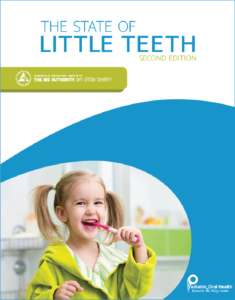
- Nearly half of children aged 6–11 in the U.S. population are affected by tooth decay, along with more than half of those aged 12–19.
- Children aged 2–9 living in poverty are twice as likely to suffer tooth decay as their more affluent peers.
- Children in the U.S. miss over 34 million school hours each year due to dental problems.
- After eight years of follow up, children who had their first dental visit before the age of four spent an average of $360 less on dental treatment than those who did not.